How Social Media Is Changing the Marketing Funnel

Performance Digital • October 20, 2026

Social media and the internet have been part of everyday life for years, but the way people use these platforms continues to change. As social platforms have added more features, integrations, search capabilities, and shopping tools, they have also changed how businesses reach customers, and how customers move through the marketing funnel. 


The traditional marketing funnel is usually viewed as a fairly straightforward journey: someone becomes aware of a business, develops interest, considers their options, and eventually converts. 


Today, that journey is much less linear. 

Social Media Is More Than an Awareness Channel 

People are constantly scrolling through content from businesses, creators, friends, influencers, and advertisers. For brands, simply appearing in someone's feed is no longer enough. Your content needs to stand out, but your business also needs to be prepared for what happens after someone becomes interested. 


A user might see one of your ads without taking action. A few days later, they might see another video from your business. Then they may come across an organic post, a review, or content from someone else talking about your brand. 


Over time, those interactions build familiarity and keep your business top of mind. 


When that person finally decides they are interested enough to take the next step, the path to conversion needs to be easy. That could mean having clear links to your website, making important information easy to find, or allowing users to purchase directly through platforms such as TikTok Shop or Instagram's shopping features. 


Social media is no longer just helping businesses generate awareness. In many cases, it can support almost the entire customer journey. 

Search Is Changing Too

One of the biggest changes is how people discover businesses in the first place. 

Traditionally, someone looking for a restaurant might open Google and search something like "food near me." Now, people can also open TikTok, Instagram, or another social platform and search for things such as "restaurants in Omaha" or "lunch in my city." 


Instead of receiving only a traditional list of search results, they may find videos, reviews, photos, creator recommendations, and other organic content showing them what the experience is actually like. 


That changes where the customer enters the marketing funnel.


Someone discovering a restaurant through a social video may not be in the early awareness stage at all. They may already be actively searching for somewhere to eat, comparing options, and getting ready to make a decision. 


For businesses, this makes organic social content increasingly important. Reviews, videos, location information, customer content, and an active social presence can help a business appear when someone is already showing strong intent. 

The Funnel Is Becoming Less Linear 

The customer journey hasn't disappeared, but the lines between each stage are becoming less defined. 


Someone can discover a business, research it, read reviews, interact with content, and make a purchase without ever leaving the same platform. Another person might see an ad several times, search for the business later, visit its website, return to social media, and eventually convert days or weeks afterward. 


Instead of thinking about social media as something that only sits at the top of the funnel, businesses should think about how their entire digital presence works together. 

Advertising creates visibility. Organic content builds trust and provides information. Searchable social content helps with discovery. Reviews provide validation. Websites and social commerce tools make conversion possible. 


The important question is no longer just, "How do we get people to see our content?" 

It is also, "When someone is ready to take the next step, have we made that step as easy as possible?" 


As social platforms continue to combine content, search, advertising, reviews, and commerce, businesses need to think about the marketing funnel differently. The opportunity isn't simply to reach more people. It's to create a connected experience that allows someone to move from discovery to decision wherever they happen to find your brand. 

Build a Strategy That Matches How People Search, Scroll, and Convert 

The marketing funnel is changing, and your strategy should change with it. Paid advertising, organic content, social search, reviews, websites, and conversion points all need to work together to create a smoother customer journey. 


If you’re interested in building a strategy that better connects these pieces, reach out to Performance Digital. Our team can help create a marketing strategy tailored to your business, your audience, and how your customers actually discover and interact with your brand. 

Share

Text reading “How to Handle Negative Comments Without Damaging Your Brand” beside a thumbs-down icon
By Performance Digital • October 13, 2026
Every brand with a comment section will eventually get a bad one. What separates a one-off complaint from a lasting reputation hit isn’t the criticism itself. It’s what your brand does next. A single unhappy comment rarely sinks a brand. A slow, defensive, or tone-deaf reply is what turns it into a story. The good news? Handling criticism well is a skill, not a personality trait. It comes down to a few repeatable habits.
Billboard reading “THE BILLBOARD TEST” on a gray sign against a blue sky.
By Performance Digital • October 6, 2026
Learn why short headlines, minimal copy, and clear visual hierarchy can improve display ad and landing page performance and help drive more clicks.

Robot elephant in a modern office, surrounded by coworkers watching it attentively
September 23, 2026
A practical look at where AI helps marketers and where human judgement still matters.
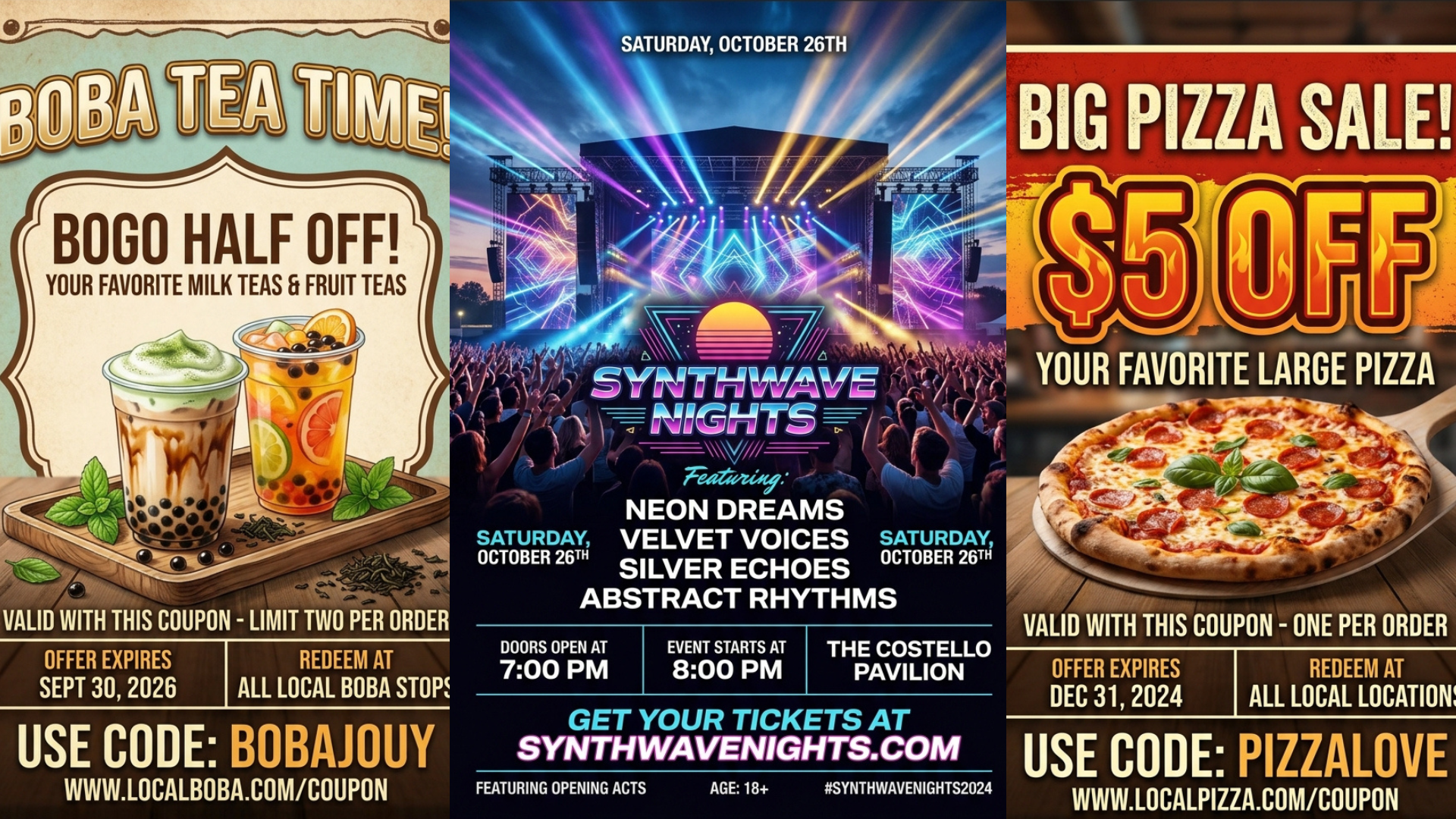
Three AI Generated event flyers: boba tea sale, neon concert night, and big pizza sale
By Performance Digital • September 15, 2026
There's an instinct among certain business owners to keep up with the latest marketing trends, and right now, the trend is AI flyers. They're scattered across social media and aside from sales and promotions, can communicate a lot about what or who a brand is. The instinct is understandable, and for many business owners, a quick solution that can potentially elevate their brand is exactly what they need. The low barrier to entry seems attractive to someone who's already strapped for time and may not be able to afford a professional designer on a weekly basis, but here are a few things to consider and ask yourself before putting one of these flyers together.

Human hand reaching toward a robotic hand on a white background
By Performance Digital • September 8, 2026
There’s a sentence I hear more and more often in digital marketing conversations: “Well, can’t I just use AI to make that?” And the answer is… probably. You can use AI to write a blog, create social posts, generate an image, draft an email, come up with Google Ads headlines or build a content calendar in seconds. I’m not going to tell you that’s a bad thing. We use AI, too. It has made parts of our jobs faster, helped us work through ideas and given marketers access to tools we couldn’t have imagined a few years ago. But being able to make something and knowing what you should make are two very different things. 
Laptop screen showing “OMNICHANNEL MARKETING” with digital communication icons
By Performance Digital • September 2, 2026
Running ads on every platform feels like progress. But if the same message is just copied from one channel to the next, you’re leaving your best growth on the table. Here’s the difference, and why it matters most for small and medium businesses. If you run a small or medium business, you’re probably already doing more marketing than you get credit for. You’re on Google. You’re on Instagram and Facebook. Maybe you’ve dabbled in YouTube, sent a few emails, or put your name on a billboard. By most definitions, you’re “everywhere.” That’s multichannel marketing, and it’s a solid foundation. But being present on a lot of channels isn’t the same as making those channels work together. The businesses that pull ahead aren’t the ones on the most platforms. They’re the ones running omnichannel campaigns: one clear idea, adapted to each channel and each audience, so the whole thing feels like a single, coordinated story. For a business with a limited budget, that distinction isn’t a nice-to-have. It’s the difference between spending money to be seen and spending money to be remembered.