Addressing the AI Elephant in the Room

September 23, 2026
Author: Jackson Ebeling

A practical look at where AI helps marketers and where human judgement still matters.

I've worked in digital marketing for close to ten years ow, which is a strange sentence to white when I'm still young enough to get carded buying cold medicine.


I built my first website at sixteen, optimized it for search, and ran ads for it. The site was hardly a technological marvel, but the timing gave me a front row seat to a lot of change. I watched advertising platforms become standard business tools. Website builders made development more accessible. Google grew powerful enough to shape how entire industries operated online.


So I remember digital marketing before generative AI was available to anyone with an internet connection. I'm also young enough to be buried in the technology now, testing where it helps and where it creates more trouble than it solves.


Clients and business owners keep asking the same kinds of questions. Does Performance Digital use AI? Will we let it create ads or branded assets? Is it going to replace designers, copywriters, strategists, agencies, or web developers? Should any of us be worried?


For me, those questions land in roughly the same place. How much trust should we give AI when it is representing a business in public?

Where I Draw The Line

Performance Digital uses AI. I use it every day. It helps sort information, organize rough thinking, support research, clean up writing, and handle repetitive internal work that would otherwise eat through hours.


The boundary comes when the work speaks for a client. We do not hand raw AI output to the public as finished creative, final copy, client communication, or strategy. A person who understands the business still has to make the choices, check the facts, and answer for the result.


This is a practical boundary. Ignoring AI would be fooling and, in my case, pretty hypocritical. I spend more time testing, breaking, and arguing with these tools than any functioning adult probably should. Giving them unchecked authority would be foolish too.


AI will change the way marketing gets done. It can make a capable person faster. It can also help a company produce an enormous amount of bland material before anyone stops to ask whether a customer will care.


Can AI make an ad? Of course it can. The harder questions begin after that. Should it speak for your brand? What will customers read into the choice? Who owns the mess if the answer goes badly?

Can AI Make a Good Ad

Almost every week, I hear some version of the claim that generative AI can replace a professional designer and produce ads, logos, website images, or other branded assets at the same quality or better.


I understand the appeal. Business owners are short on time, money, employees, patience, or some charming combination of all four. A tool that promises thirty seconds of work instead of a creative brief and several rounds of revisions is going to get attention.


But you know me, I like the inconvenient questions.

Look at what AI Companies Do For Themselves

OpenAI developed its first major ChatGPT brand campaign with its internal team, agency Isle of Any, and a full production crew. The team shot the campaign on 35mm film. ChatGPT helped with shot lists and schedules. People still handled the direction, cinematography, acting, production, and creative judgement. Anthropic's first Super Bowl campaign for Claude also appears in Mother London's agency portfolio.


These campaigns do not reveal every production decision, and the companies may have used AI elsewhere in the process. We can still see what happens when their reputations are on the line. They put experienced people around the work.


The companies selling these systems understand their strengths better than the rest of us. Their decision to keep human creative direction involved should tell us something.

Your Opinion is Not Customer Research

A business owner is usually not the audience for the ad. Something that looks acceptable from behind the desk may be the first contact thousands of people have with the company. They will make quick assumptions about its quality, credibility, personality, and value. Saying it looks good enough to me does not answer how a customer sees it.


A 2026 experiment by Ipsos and Syracuse University tested twenty ads with 3,000 consumers in the United States. Half were existing ads made by people. The other half were created entirely with AI from the same strategies. The human work performed 14 percent better for immediate effectiveness and 17 percent better for longer term effectiveness.


AI did best when the assignment was direct and functional. Here is the problem, here is the product, and here is how it helps. The gap grew when the ad needed emotion, humor, surprise, storytelling, or a recognizable point of view.


An AI system can assemble an advertisement. Giving somebody a reason to remember it is harder. Production was never the entire job. The job is to make a specific person care.

What Customers Read Into The Work

An ad made with AI does not have to look bizarre to hurt a brand. Sometimes the bigger risk is what the choice makes people assume about the company behind it.


The broadest recent data from the United States is uncomfortable. In an August 2026 survey from Bentley University and Gallup, 49 percent of Americans viewed business use of AI in advertising negatively. Only 19 percent viewed it positively. Negative views reached 66 percent among adults ages 18 to 29.


Consumers were more accepting when AI stayed behind the scenes and a person remained responsible for the result.

  • 75 percent considered disclosed AI use acceptable for brainstorming or early drafts.
  • 53 percent accepted disclosed AI use in final text, images, or video.
  • 62 percent still considered synthetic people or voices unacceptable, even when the company disclosed their use.

People were much more comfortable with AI as a helper than as the face of the work.

Detection is The Wrong Test

People often defend AI creative by saying that customers cannot tell the difference. The research is mixed, which is exactly why detection makes a poor standard.

  • A study of 1,276 people found that average accuracy across synthetic images, audio, video, and combined audio and video was 51.2 percent, about the same as guessing.
  • A large public experiment gathered roughly 287,000 judgements. Participants correctly classified real images and images made with AI 62 percent of the time. That is better than chance, but far from reliable.
  • In the Ipsos ad experiment, only 25 percent of people who saw an ad made with AI felt at least somewhat confident that AI was involved. Another 40 percent were unsure either way.

The same Ipsos viewers still rated the human ads as more imaginative, entertaining, unique, noticeable, and worth talking about. They reacted differently even when they could not explain why.


Sometimes the problem is easy to spot. A face, voice, movement, or expression slips into the uncanny valley. Other times the ad simply feels polished in a hollow way. It has no rough edges, no point of view, and nothing that could only have come from this business. Fixing the sixth finger does not fix that.


A customer may never consciously think that AI made the ad. They may scroll past, trust it a little less, or forget it immediately. Advertising does not get credit because the audience failed to identify the production method. It works when the audience notices the message and trusts it enough to respond.


When I see obvious AI output in place of thoughtful creative work, I do not think the company is more innovative. I wonder where else it is cutting corners. If this is the part the company chose to show me, what is happening the the parts I cannot see?


That assumption may be unfair. Customer perception has never needed to be fair to affect a business.


I call this brand cheapification. The company sees money saved in production. The audience sees a clue about how much care the company puts into everything else.

The Anger Does Not Stay With The Ad

Terrible advertising existed long before generative AI. I have seen plenty of campaigns made entirely by people that were confusing, irritating, badly timed, or apparently approved in a meeting where everyone was afraid to ask what the hell they were doing.


Some AI ads draw a different kind of criticism. People judge the decision behind the ad along with the ad itself. A complaint about the visuals quickly turns into a judgement that the company is lazy, greedy, dishonest, careless with its customers,, or eager to replace employees and creative professionals.


That gap is easy to see in IAB's 2026 survey of more than 500 Gen Z and Millennial consumers and 100 advertising executives. 82 percent of executives believed those consumers felt positively about ads made with AI. Only 45 percent of consumers actually did. Gen Z respondents were especially likely to describe brands using AI as inauthentic, disconnected, or unethical.


Another study in the Journal of Retailing and Consumer Services reviewed 7,822 comments on YouTube and Reddit about Coca Cola's holiday campaign made with AI. 81 percent expressed clear dislike. The discussion moved quickly from visual quality to soullessness, lost jobs, corporate greed, and judgements about Coca Cola itself.


Rival Technologies found a similar reaction in its July 2026 panel survey of 901 Gen Z consumers in the United States and Canada. 72 percent said they had taken at least one negative action after seeing marketing they believed was made with AI. Those actions included unfollowing, unsubscribing, complaining to other people, or buying less.


Those numbers need some boundaries. People who chose to comment on a controversial Coca Cola holiday campaign are not a representative sample, and nostalgia is practically a laboratory for making people angry. Rival asked panel members to report their own behavior. None of this proves that every ad made with AI will trigger a boycot.


It does help explain why the backlash can feel so personal. AI now carries arguments about jobs, authenticity, misinformation, environmental impact, creative work, and corporate cost cutting. A company may only mean to publish an ad. Some viewers will read that ad as the company's position on all of those arguments.


Gallup also found different levels of concern across political groups. Negative views of AI advertising reached 59 percent among Democrats, 49 percent among Independents, and 36 percent among Republicans. Majorities in all three groups opposed synthetic people or voices in advertising.


A bad ad can look like a mistake. An obviously automated one can look like a choice. Once the work is public, the company cannot control what people decide that choice says about it.

The Legal Questions Still Matter

Then we get to the considerably less entertaining subject of intellectual property.


Businesses sometimes talk about an AI logo, slogan, image, or campaign character as though possession of the file settles ownership. It does not. The vendor's terms, copyright protection, exclusivity, and legal clearance, each answer a different question.


The contract comes first. Terms differ by tool and by plan. OpenAI's current consumer terms say that the user owns the output as between the user and OpenAI, to the extent allowed by law.


Copyright is a separate issue. The United States Copyright Office says material created entirely by AI, or without enough human control over its expressive elements, is not protected. Human expression, a meaningful arrangement of material, or substantial modification may qualify depending on the facts. Propts along generally do not.


Ownership under a vendor contract also does not make the output exclusive. OpenAI warns that other users may receive similar material. The contract does not guarantee that an image, name, likeness, slogan, or design avoids someone else's right either. Important brand assets still deserve a similarity search and professional legal review.


None of this means every AI output is someone else's work wearing a fake mustache. A file that looks good is still not an originality opinion, a trademark search, or a guarantee.


The rist may be manageable for an internal mockup. A logo, mascot, slogan, or campaign asset that a business plans to own and defend for years deserves more care. That work needs meaningful human authorship and proper clearance.


I'm a marketer, not an intellectual property attorney, so none of this is legal advice. I do know the cheapest logo n the room becomes considerably more expensive after it goes on a building and a cease and desist letter arrives.

How Performance Digital Uses AI

AI has a job at Performance Digital. It also has limits.


What we use it for:

  • Organizing documents, meeting notes, and internal information.
  • Summarizing research and testing early ideas.
  • Turning rough thoughts into a structure that a person can develop.
  • Handling repetitive spreadsheet and internal data tasks.
  • Helping edit writing that a person reviews and approves.


What still belongs to people

  • Creating and approving finished advertising or public copy.
  • Reviewing and sending client communication.
  • Making final decisions about strategy, brands, or customers.
  • Taking responsibility for the work.


AI can support the process around client work. It does not become the author or the final decision maker. Someone who knows the client and the audience develops the work, checks the facts, makes the call, and puts their name behind what goes out.


These rules may change as the technology, evidence, and law change. Any change will be deliberate and based on actual customer response. Discovering a shiny new button is not enough.

Yes, AI Helped to Create This Post

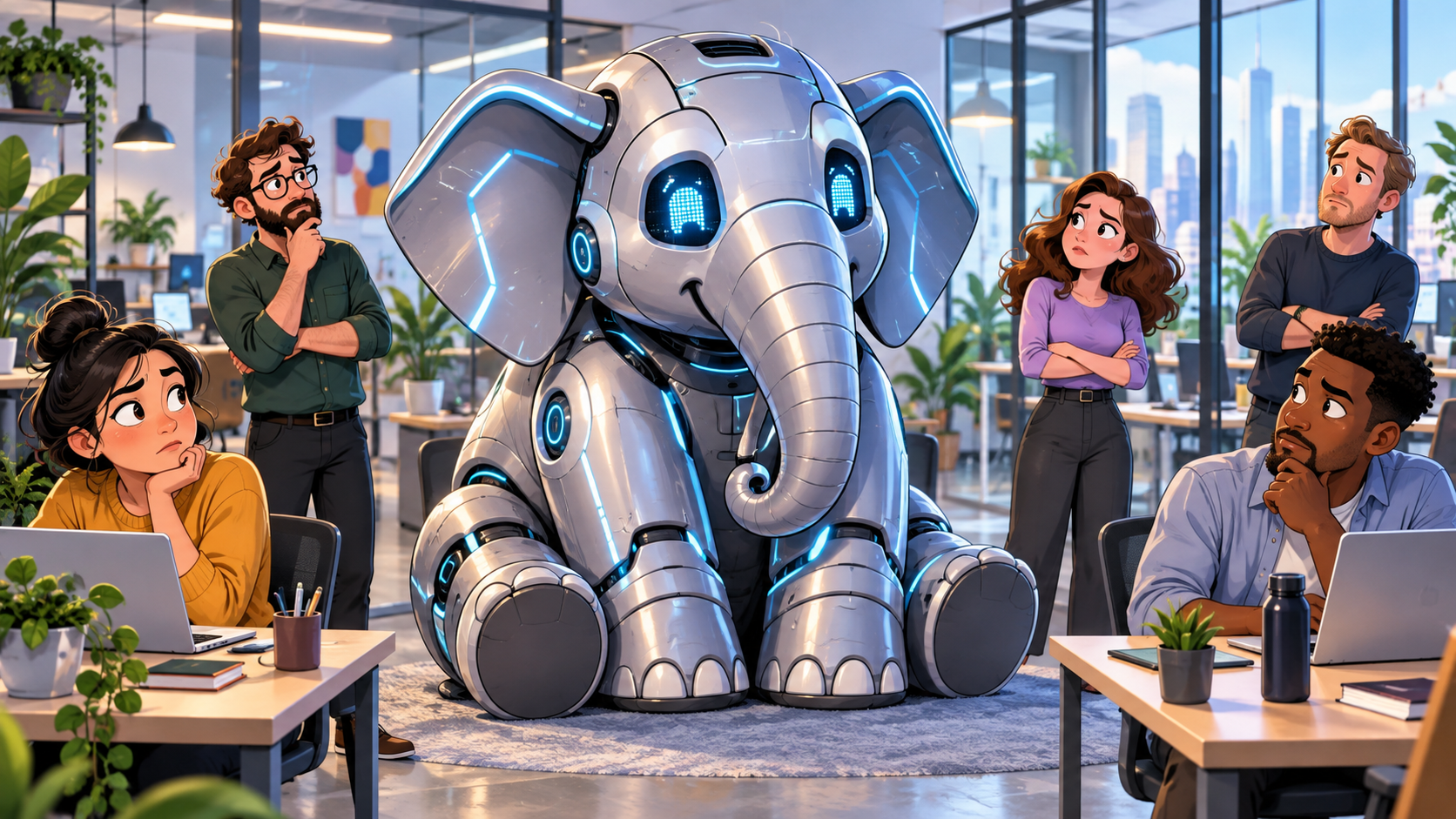
The disclosure is worth making plainly. If you couldn't tell from the clearly AI-generated thumbnail image, AI was partially used in the production of this post. It helped pull together research to support my observations from the real world, it helped organize my mess of notes on this topic into a cohesive message, and it also helped me challenge some of the internal claims and bias I had on this topic myself.


But the key is that I decided the primary message of this article, its supporting components, how it relates to our company, and then reviewed the outputs. Not AI. That is the kind of use being defended here.


AI will become a normal part of marketing work. Good professionals will use it to move faster and spend more time on the decisions that need them. It will also make it incredibly easy to produce cheap, generic material that nobody asked for and almost nobody will remember.


A weak idea stays weak when it is produced faster. Publishing the wrong thing still costs a business, even when making it was cheap.


AI has a desk in the office. The art department still keeps its own keys.

Share

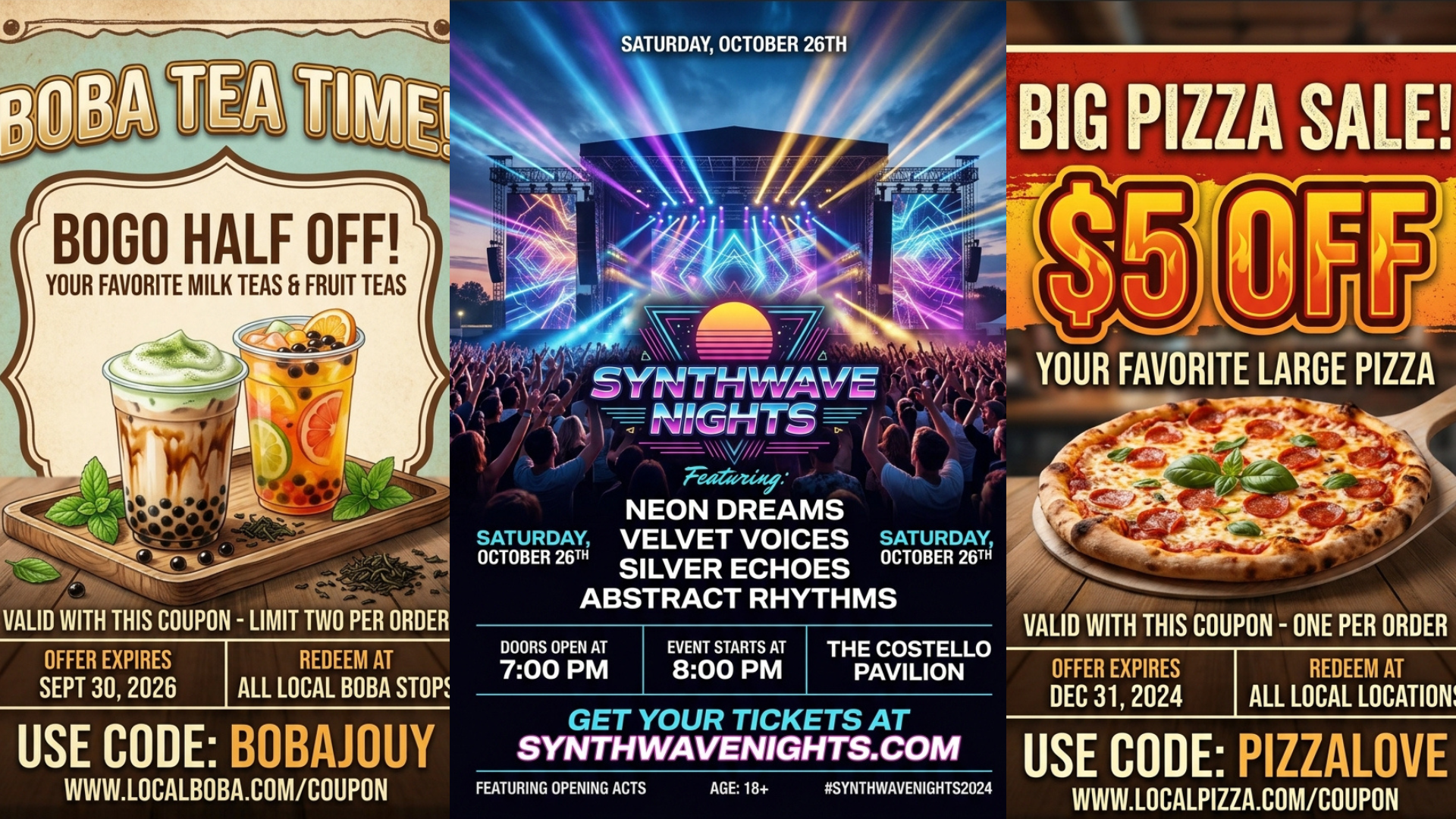
Three AI Generated event flyers: boba tea sale, neon concert night, and big pizza sale
By Performance Digital September 15, 2026
There's an instinct among certain business owners to keep up with the latest marketing trends, and right now, the trend is AI flyers. They're scattered across social media and aside from sales and promotions, can communicate a lot about what or who a brand is. The instinct is understandable, and for many business owners, a quick solution that can potentially elevate their brand is exactly what they need. The low barrier to entry seems attractive to someone who's already strapped for time and may not be able to afford a professional designer on a weekly basis, but here are a few things to consider and ask yourself before putting one of these flyers together.
Human hand reaching toward a robotic hand on a white background
By Performance Digital September 8, 2026
There’s a sentence I hear more and more often in digital marketing conversations: “Well, can’t I just use AI to make that?” And the answer is… probably. You can use AI to write a blog, create social posts, generate an image, draft an email, come up with Google Ads headlines or build a content calendar in seconds. I’m not going to tell you that’s a bad thing. We use AI, too. It has made parts of our jobs faster, helped us work through ideas and given marketers access to tools we couldn’t have imagined a few years ago. But being able to make something and knowing what you should make are two very different things. 
Laptop screen showing “OMNICHANNEL MARKETING” with digital communication icons
By Performance Digital September 2, 2026
Running ads on every platform feels like progress. But if the same message is just copied from one channel to the next, you’re leaving your best growth on the table. Here’s the difference, and why it matters most for small and medium businesses. If you run a small or medium business, you’re probably already doing more marketing than you get credit for. You’re on Google. You’re on Instagram and Facebook. Maybe you’ve dabbled in YouTube, sent a few emails, or put your name on a billboard. By most definitions, you’re “everywhere.” That’s multichannel marketing, and it’s a solid foundation. But being present on a lot of channels isn’t the same as making those channels work together. The businesses that pull ahead aren’t the ones on the most platforms. They’re the ones running omnichannel campaigns: one clear idea, adapted to each channel and each audience, so the whole thing feels like a single, coordinated story. For a business with a limited budget, that distinction isn’t a nice-to-have. It’s the difference between spending money to be seen and spending money to be remembered.

Hands around a table reviewing colorful business charts and graphs on papers and tablets.
By Alexis Rios August 26, 2026
What Is Marketing Data?
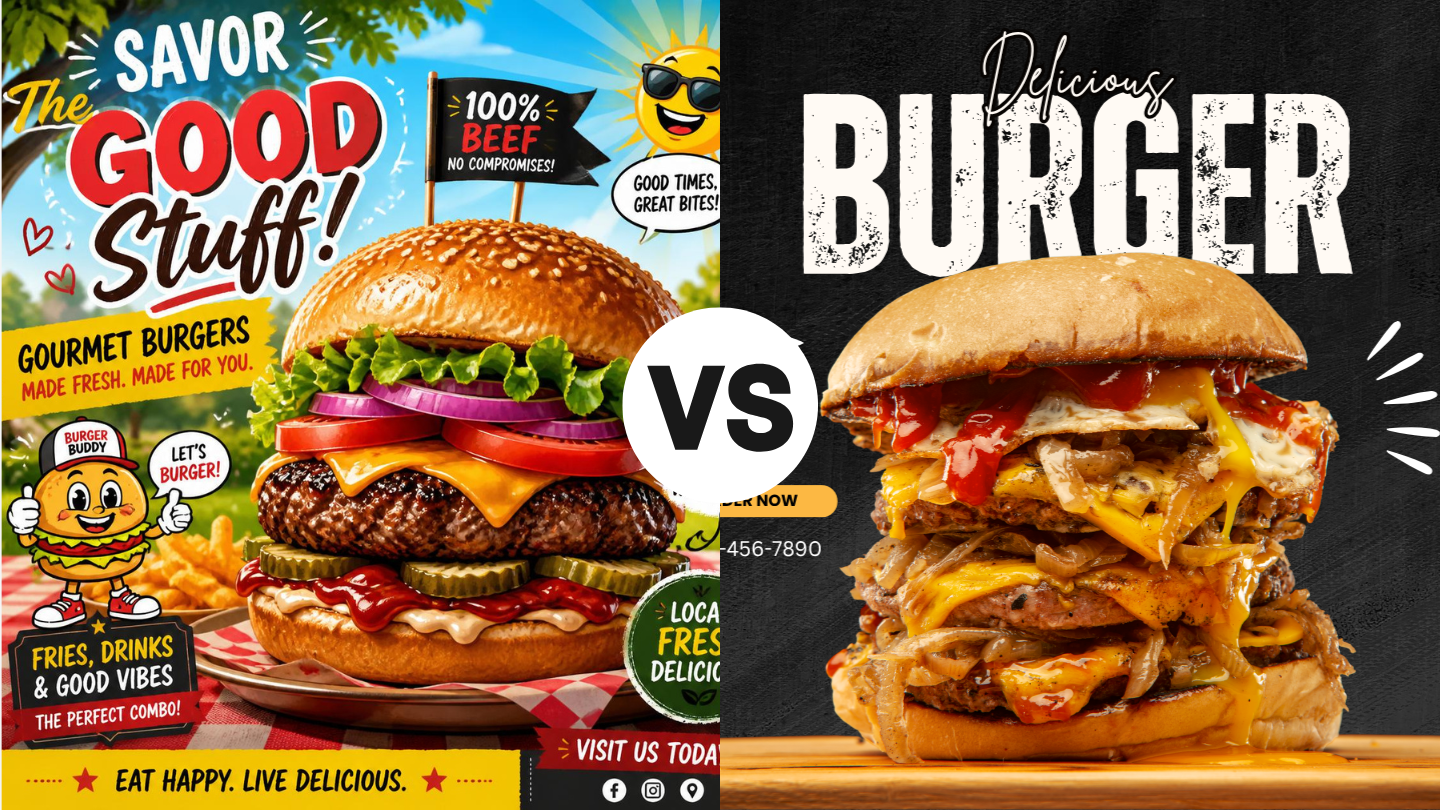
Side-by-side burger ad comparing an AI burger ad and a real burger ad
By Brayden Will August 19, 2026
There's a pattern showing up everywhere right now. A business needs a logo, so someone types a prompt. They need a website, so they pull the two loudest colors out of that logo and call it a palette. They need social posts and an event flyer, so they generate more of the same. Then they paste the identical mark across every surface they own and call the whole thing branding. Here's what most owners and marketing leads don't realize: their audience can tell. Gen Z and millennials can spot generated work almost instantly, and the reaction isn't neutral. It reads as cheap, lazy, and fake. Gen Z is skeptical of AI across the board, but the skepticism gets sharpest when a company uses it for the things that are supposed to represent who they are. A generated logo doesn't say "we're efficient." It says, "We didn't care enough to make this ourselves." A brand is an ecosystem, not a file. The mistake underneath all of this is a definition problem. People think a brand is a logo. A brand is an ecosystem of decisions, strategy, voice, and visuals, woven into what a company believes and how it operates. Trying to rebuild that ecosystem from copies of a single generated graphic is like populating an entire planet with a single organism. Nothing adapts. Nothing has a role. There's no relationship between the parts because there was never a system, just a file that got duplicated. Generative AI isn't at a place where it can replicate the human touch that makes a brand ecosystem work. It can get you a passable logo, barely. Asking it to carry the attention to detail a professional designer brings to an entire identity system, and to maintain that level of detail consistently across dozens of touchpoints, isn't something it can do yet. Why the ecosystem matters more than the logo Every business that has found even minimal success has a real brand behind it. That's not a coincidence, and it's not because the logo was pretty. A strong brand does three things that go straight to the bottom line: It builds trust and credibility fast. People decide whether you're legitimate before they read a single word of copy. It creates consistency across every touchpoint. Ads, signage, social, email, and physical assets. When all of it feels like one company, you feel like a company worth buying from. It stretches your marketing budget. A strong brand makes every campaign more effective, which means the same spend does more work. Weak branding means you're paying to reintroduce yourself every single time. The building blocks, in the order that works 1 - Know who you are and who you're for This is the step everyone skips, and it's probably the most common reason businesses stall out. If you can't articulate your identity and your audience, nothing downstream has anything to hold onto. 2 - Build the visual identity Logos, colors, type. This is the flashy step, the one everyone wants to start with, because it's the face of the brand and it's what people point at. Built on a weak base, it means next to nothing. 3 - Combine them into voice and messaging Steps one and two together tell you how the brand speaks. Values plus visuals equals how you want to be seen, how you're represented, and how you communicate. 4 - Stay consistent everywhere The step that looks the least glamorous and matters just as much. The right logo, type, and colors in every place your brand appears, plus a voice that holds steady across all of it. Successful brands don't just do these steps. They do them in this order. Signs your branding needs work Your look shifts depending on the platform Nothing clearly separates you from your competitors. Your team can't describe the brand in one sentence. Every marketing push feels like starting from scratch. If more than one of those landed, the problem isn't your logo. It's that there was never a foundation under it. How we approach it at Performance Digital We spend most of our energy on the steps people skip. It starts with a 60-to-90-minute guided discovery session. We ask complex questions designed to get to the root of who you are, covering primary audience considerations, brand personality and attributes, desired market positioning, and voice and tone direction. It's not a form. It's a conversation that surfaces things most teams have never put into words. From there, we write a brand brief: brand direction, target audience, brand personality, positioning priorities, visual objectives, and voice and tone characteristics. All of that happens before a single logo concept gets sketched. That's the point. By the time we start designing, we already know exactly what the design must accomplish, so every choice traces back to something real about your business. Let's look at yours If any of the signs above sounded familiar, it's worth getting a second set of eyes on it before you spend another dollar pushing an identity that isn't working. Reach out for a brand audit , and we'll walk through where your brand stands today, what's holding it back, and what it would take to build something your audience believes.
Smartphone on a tripod recording a woman speaking indoors, with a ring light above the phone.
August 13, 2026
What is Social Media Algorithm?