The Modern Buying Funnel: How Different Generations Discover, Research, and Choose Businesses

Alexis Rios • May 26, 2026

Why Generational Consumer Behavior Matters More Than Ever

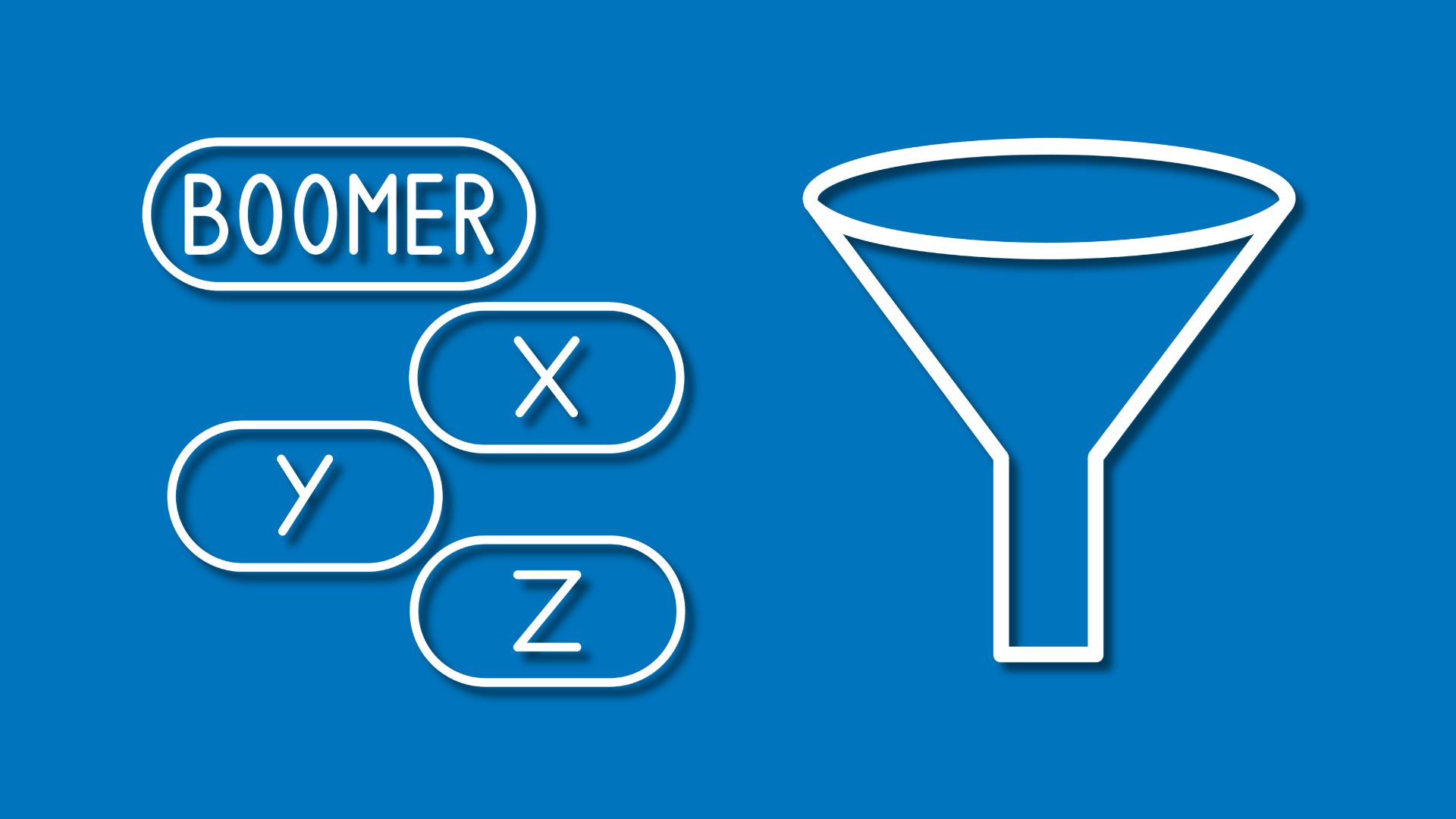
The traditional buying funnel still matters. Consumers still move through awareness, interest, and consideration before making a purchase. What has changed is how different generations move through those stages.


Every generation was shaped by different technology, media habits, and consumer expectations. Because of that, a one-size-fits-all marketing strategy no longer works.


Businesses that understand these behavioral differences can create more effective marketing campaigns, improve conversion rates, and build stronger trust with their ideal audience.

Understanding the Modern Buying Funnel

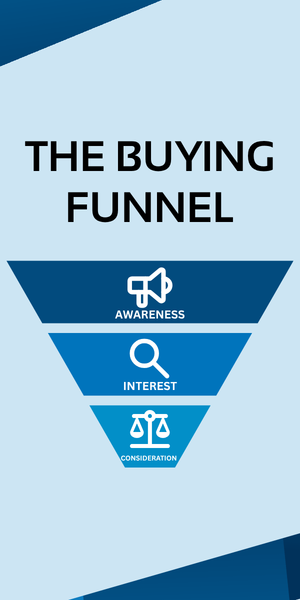
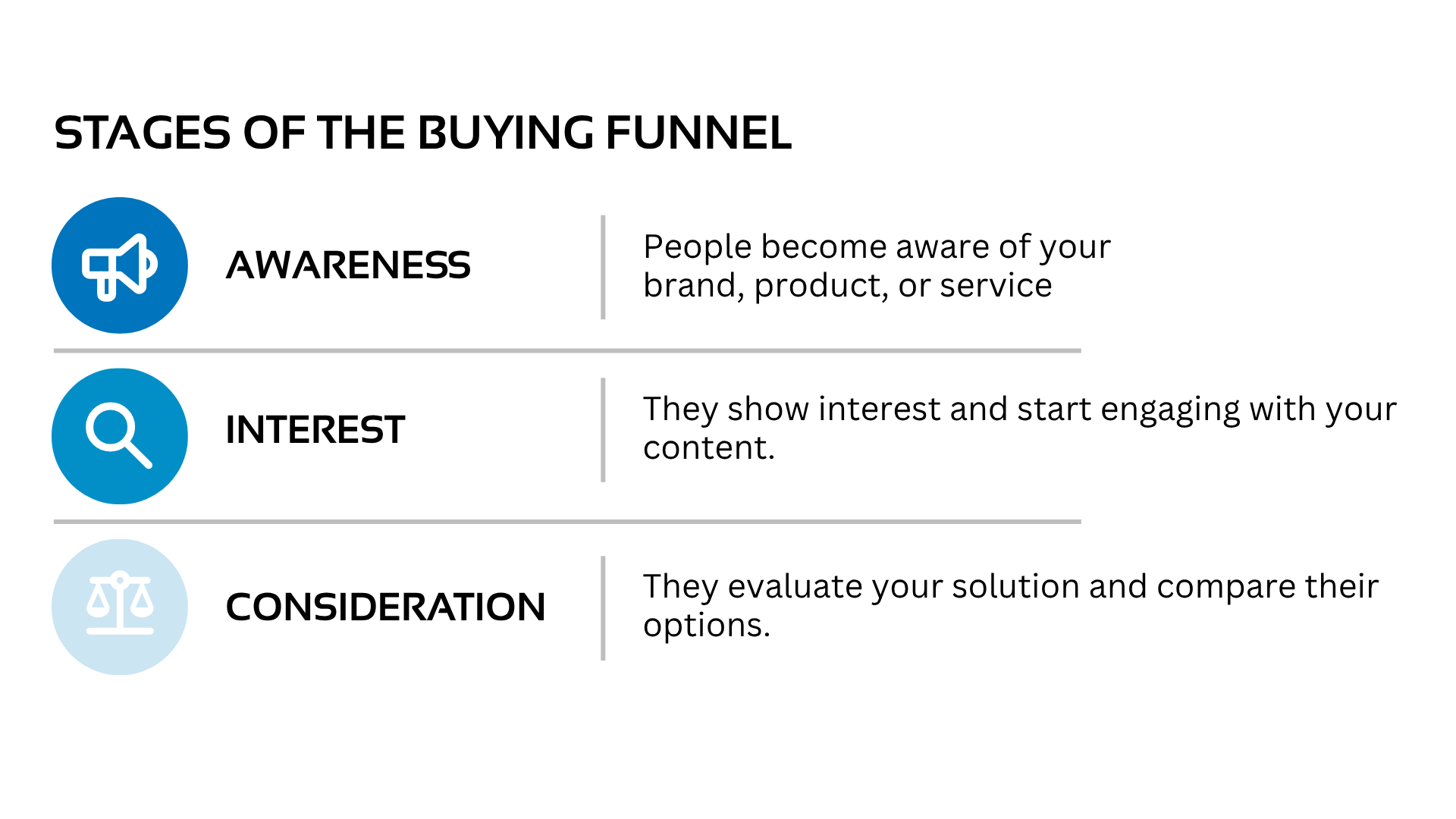
The buying funnel is still built around three core stages:

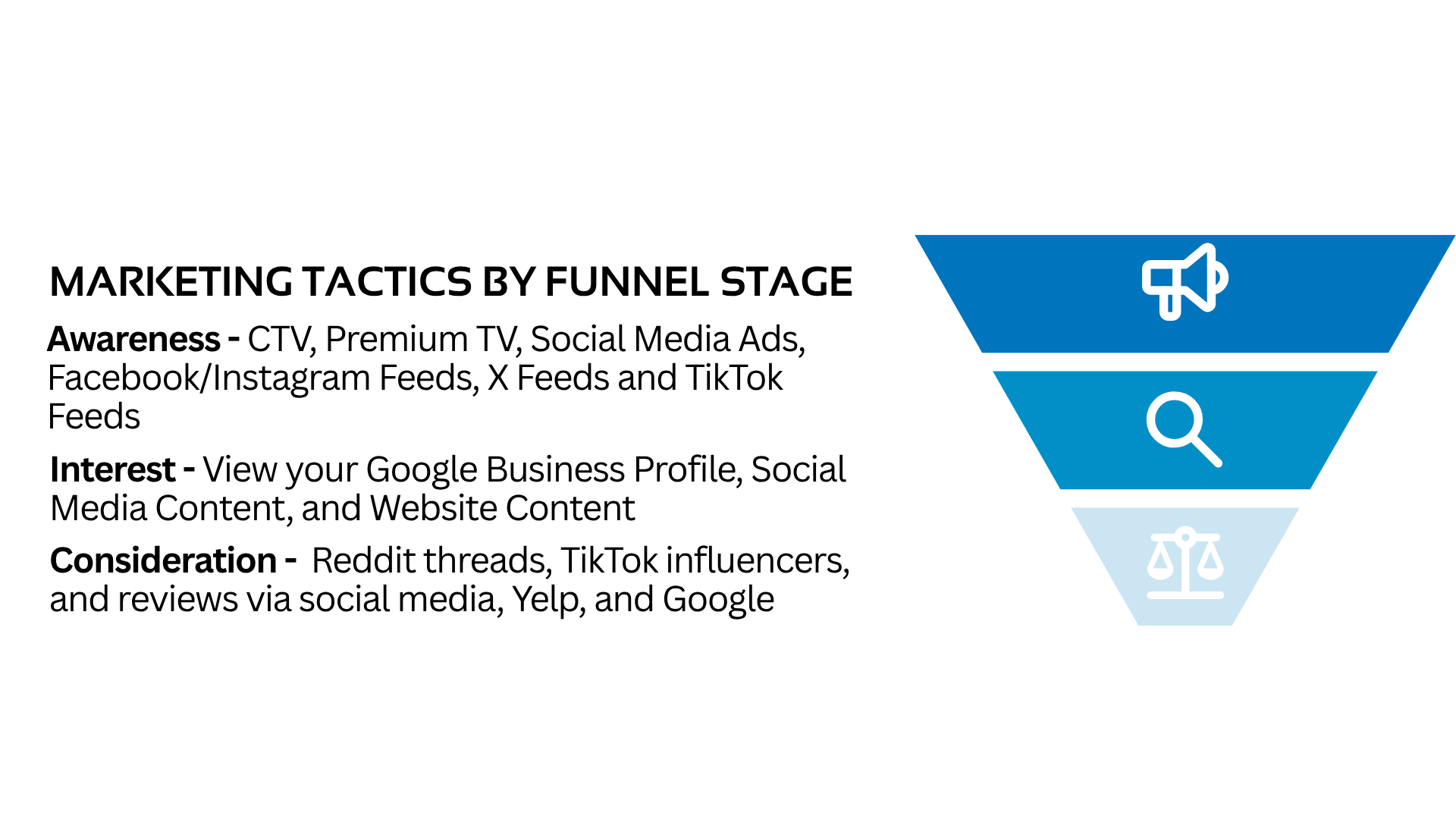
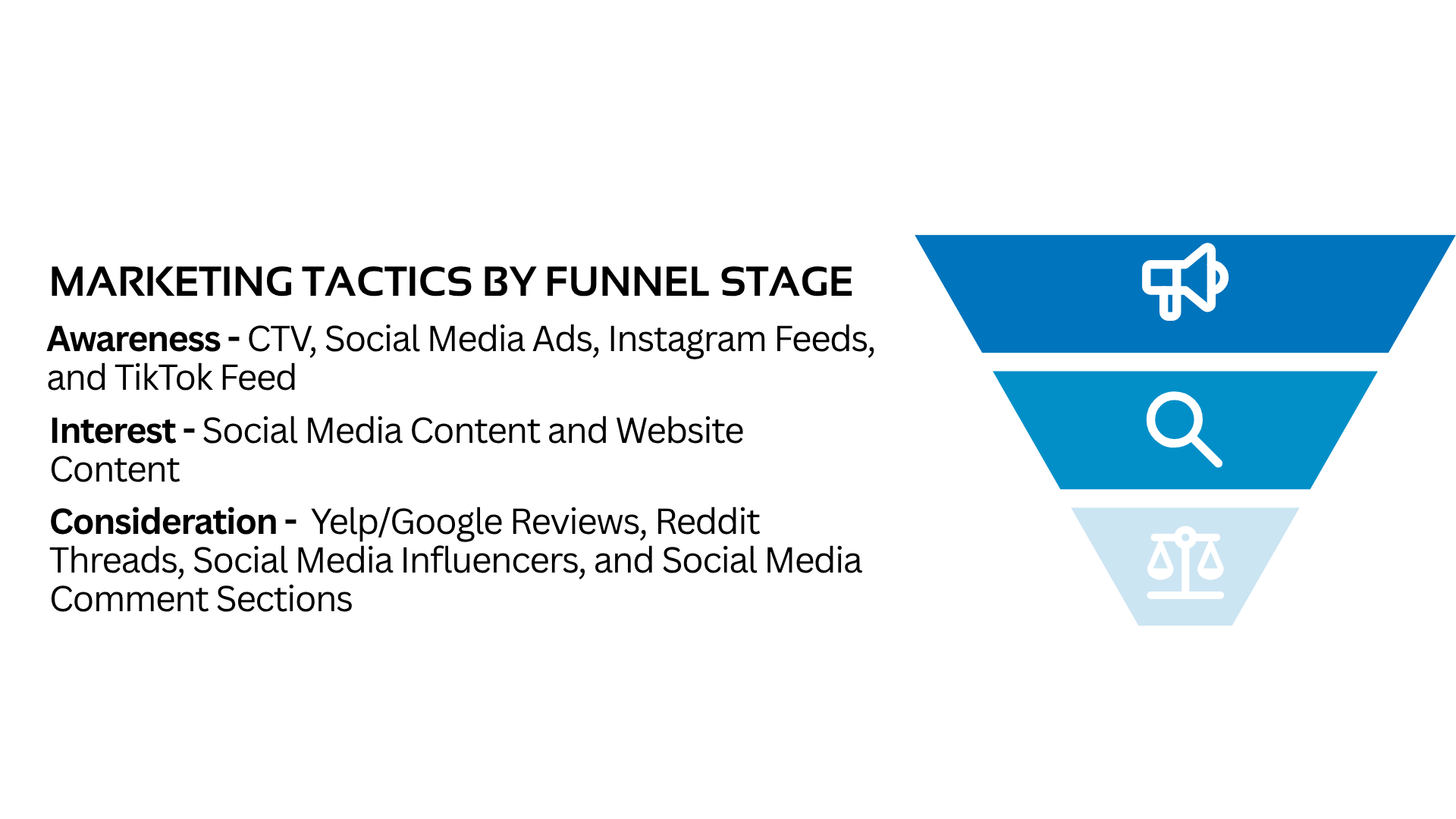
  1. Awareness -  A consumer discovers your brand, product, or service.
  2. Interest - They begin researching and engaging with your business.
  3. Consideration - They compare options, validate trust, and decide whether to convert.


The structure has not changed.


Consumer behavior has.


Today, different generations discover businesses on entirely different platforms, trust different forms of validation, and respond to different marketing tactics.

Baby Boomers (1946–1964)

How Boomers Move Through the Funnel

Baby Boomers remain one of the largest and most financially established consumer groups. Many are homeowners, long-term professionals, or retirees with significant purchasing power.


While Boomers adopted digital technology later than younger generations, they are still highly active online — especially on platforms like Facebook and Google Search.


What separates Boomers from younger audiences is their emphasis on trust, familiarity, and reputation.

Awareness Stage

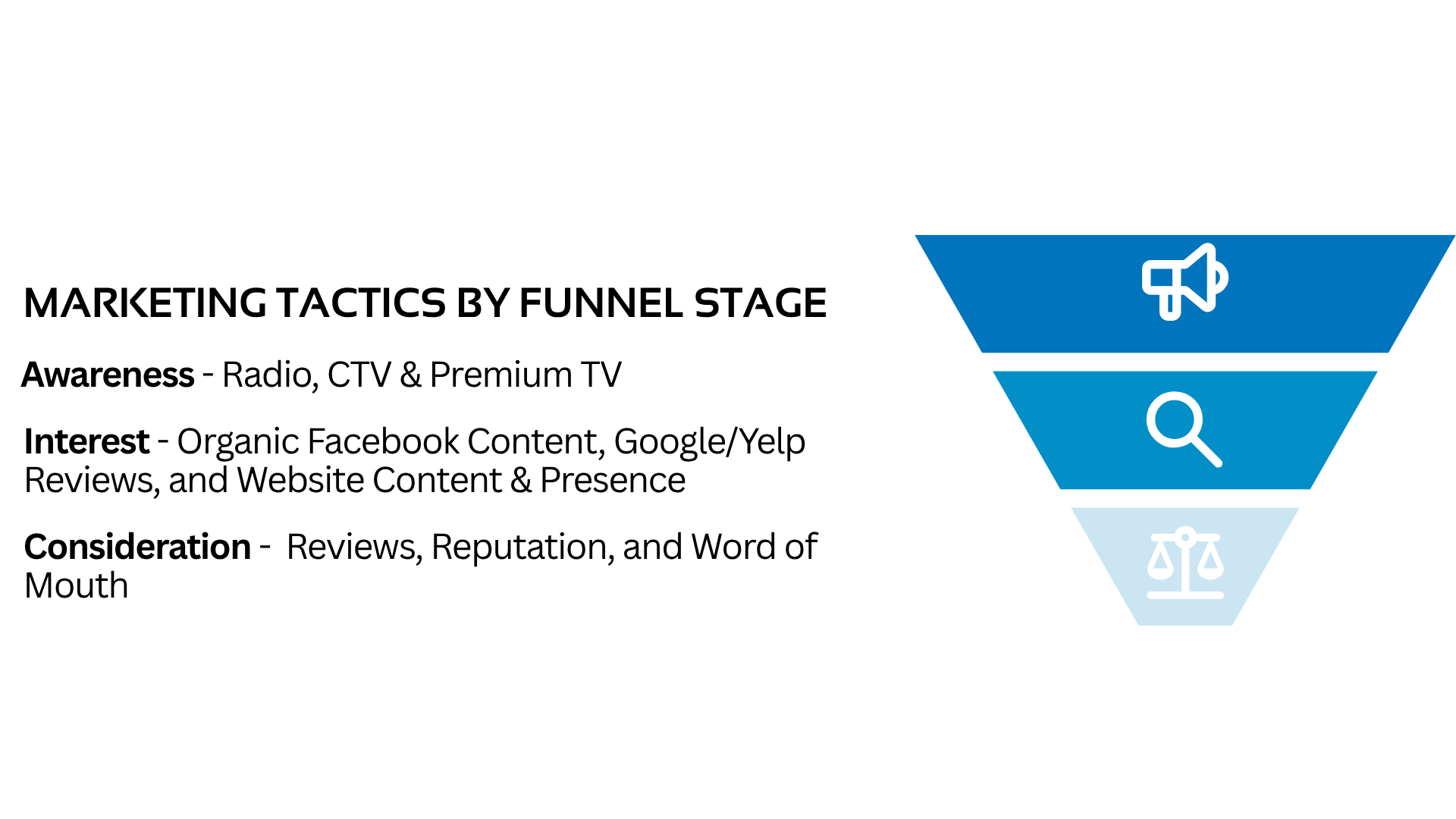
Boomers are still heavily influenced by traditional media channels, including:

  • Radio
  • Broadcast television
  • Premium TV
  • Local news
  • Community-based advertising


This is often where brand awareness begins.


For businesses targeting Boomers, traditional media still plays a major role in generating credibility and visibility.

Interest Stage

Once awareness is established, Boomers typically research businesses through:

  • Google searches
  • Facebook pages
  • Company websites
  • Google Business Profiles
  • Online reviews


At this point, online credibility becomes critical.


If a website appears outdated, incomplete, or untrustworthy, many Boomers will leave before ever contacting the business.

Consideration Stage

Boomers rely heavily on:

  • Google reviews
  • Word-of-mouth recommendations
  • Established reputation
  • Familiarity with the brand 


Trust is the deciding factor.


Businesses that lack reviews, testimonials, or recognizable credibility signals often struggle to convert this audience.

Best Marketing Channels for Boomers

Boomers rely heavily on:

  • Radio advertising
  • Premium TV and Connected TV
  • Facebook organic content
  • Reputation management
  • Google reviews
  • SEO and local search visibility

Generation X (1965–1980)

How Gen X Moves Through the Funnel

Generation X sits directly between traditional and digital consumer behavior.


They grew up during the transition from offline to online media, which makes them comfortable navigating both worlds.


Gen X consumers are often highly research-oriented and consume information across multiple platforms before making decisions.

Awareness Stage

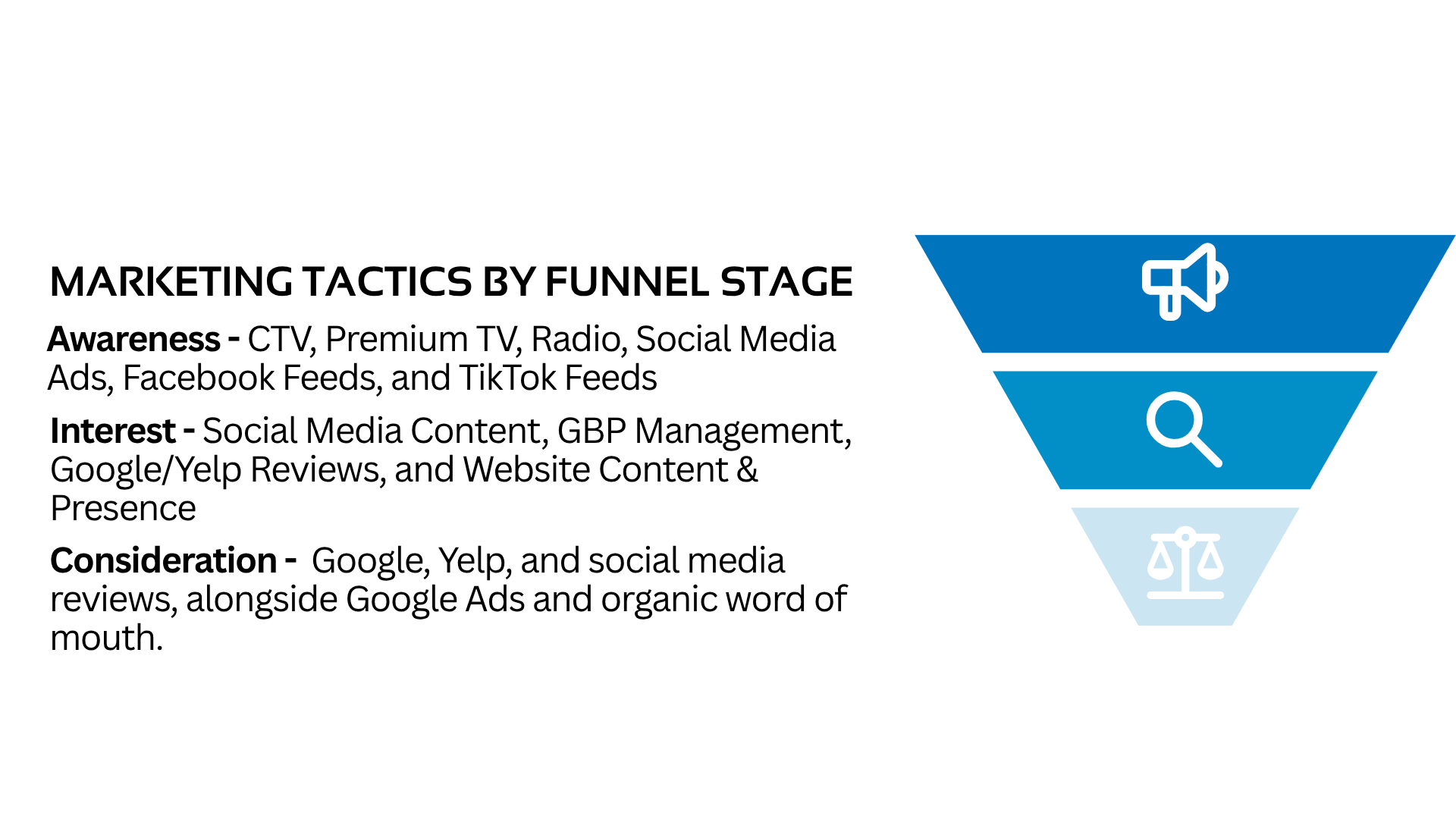
Gen X responds well to a combination of:

  • Radio
  • Broadcast television
  • Premium TV
  • Local news
  • Social media ads
  • Facebook feeds
  • TikTok and Instagram content


Unlike Boomers, Gen X consumers typically move between traditional and digital media throughout the day.


This means brands need consistent visibility across multiple channels.

Interest Stage

Once interested, Gen X tends to research thoroughly. They often validate businesses through:

  • Google searches
  • Facebook pages
  • Company websites
  • Google Business Profiles
  • Online reviews


This generation values information depth and consistency.


If branding, messaging, or reviews appear inconsistent across platforms, trust drops quickly.

Consideration Stage

Gen X relies on:

  • Reviews
  • Testimonials
  • Social proof
  • Word-of-mouth
  • Search visibility


A recommendation alone is usually not enough — they still verify everything online.

Best Marketing Channels for Gen X

  • Multi-channel advertising
  • CTV and streaming ads
  • Facebook and Instagram Feeds
  • Search engine optimization
  • Google Business Profile optimization
  • Review management
  • YouTube content
  • Retargeting campaigns

Millennials (1981–1996)

How Millennials Move Through the Funnel

Millennials helped shape the modern internet and are deeply connected to digital experiences.

They are highly research-driven and tend to evaluate brands through a combination of:

  • Social media
  • Reviews
  • Influencers
  • Community discussions
  • Search results
  • Website experience


Authenticity matters heavily to this audience.

Awareness Stage

Millennials commonly discover brands through:

  • Instagram
  • TikTok
  • YouTube
  • Connected TV (CTV)
  • Streaming platforms
  • Social media advertising


Short-form video content performs especially well during this stage.


However, CTV and premium streaming placements also help establish broader brand familiarity and legitimacy.

Interest Stage

Once engaged, Millennials typically:

  • Visit the company website
  • Read Google reviews
  • Explore social media pages
  • Check branding consistency
  • Evaluate content quality


This generation expects businesses to appear polished, credible, and active online.


A weak digital presence often causes immediate drop-off.

Consideration Stage

Millennials validate decisions through:

  • Reddit discussions
  • TikTok reviews
  • Influencer content
  • Google reviews
  • Yelp reviews
  • Real customer experiences


This generation wants proof from other people, not just the business itself.


Authenticity and transparency matter more than highly polished advertising.

Best Marketing Channels for Millenials

  • TikTok marketing
  • Instagram content
  • YouTube ads
  • Influencer partnerships
  • SEO and local SEO
  • Reddit visibility
  • Retargeting ads
  • Connected TV advertising

Generation Z (1997-2012)

How Gen Z Moves Through the Funnel

Generation Z is the first fully digital-native consumer generation.


They expect businesses to meet them instantly, communicate authentically, and provide frictionless online experiences.


Attention spans are shorter, competition is higher, and brand perception forms almost immediately.

Awareness Stage

Gen Z primarily discovers businesses through:

  • TikTok
  • Instagram Reels
  • Influencer content
  • Short-form video
  • Streaming platforms
  • Connected TV advertising


Algorithms largely determine what brands they encounter.


This means strong creative content is essential.

Interest Stage

After discovering a brand, Gen Z immediately evaluates:

  • Social media presence
  • Brand authenticity
  • Website design
  • Content quality
  • User experience
  • Community engagement


If the brand feels outdated, corporate, or disconnected, they move on quickly.

Consideration Stage

Gen Z heavily relies on social proof, including:

  • Reddit threads
  • TikTok reviews
  • Influencer recommendations
  • Comment sections
  • User-generated content
  • Online reviews


This generation also expects a seamless conversion experience.


Complicated checkout flows, slow websites, or poor mobile experiences kill conversions almost instantly.


Frictionless purchasing matters more than ever.

Best Marketing Channels for Gen Z

  • TikTok advertising
  • Instagram Reels
  • Influencer marketing
  • Short-form video
  • Mobile-first websites
  • Retargeting campaigns
  • User-generated content

The Bottom Line

The biggest mistake businesses make is assuming every audience behaves the same online.


They do not.


A Baby Boomer discovering a local business through radio and Facebook behaves very differently than a Gen Z consumer discovering a brand through TikTok.


The platforms are different.


The trust signals are different.


The validation process is different.


Businesses that understand these differences build stronger campaigns, improve customer acquisition, and create more efficient marketing strategies.


Modern marketing is no longer just about being visible.


It is about being visible on the right platforms, with the right messaging, at the right stage of the funnel for each generation.


For businesses looking to grow in today’s competitive digital landscape, working with a marketing agency like Performance Digital can help turn generational consumer insights into measurable growth. The brands that win today are the ones that meet every generation with the right message, on the right platform, at the right stage of the buying funnel.


If you’re interested in building a marketing strategy designed around how modern consumers actually discover, research, and choose businesses, message Performance Digital today to learn how your business can better connect with your ideal audience.

Share

UX vs UI comparison graphic with two website mockups on a white background
By Sydney Burright May 19, 2026
If you've ever scrolled through a website or app and thought, "Wow this website looks really cool," but then couldn't figure out how to actually checkout or find the menu, you've experienced the tug-of-war between UI and UX. These terms get thrown around a lot in the tech and marketing world, and sometimes are often put together ("UI/UX"). But while they are basically best friends who work together, they are definitely not the same thing. If you are a student looking into design or a business owner trying to figure out why your website isn't bringing you sales, here is the breakdown.
Laptop displaying a website beside a red flag on a black pole
By Sydney Burright April 23, 2026
You can have the best business in the world, but if you don't have a website or your current website looks really outdated, people are going to click the "X" and leave your website before they even see what you do. As a designer, I see these same mistakes every single day. The good news is that most of your website's problems are super easy to fix. If your site has any of these 5 red flags, then it's time to build a new one or give your current site a little glow-up.
A presentation in a classroom with two speakers in front of a projection screen and several attendees seated at tables.
By Sydney Burright March 20, 2026
Let’s be real: in 2026, if your business isn’t online, it basically doesn’t exist. When people hear about a new brand, the first thing they do is stalk the website or look for the Google reviews or check out their social media. We recently presented the 7 Marketing Essentials Every New Business Needs to contestants at The Fremont Pitch It Contest and students at Midland University and we want to share our insight with everyone. Whether you're just starting out or leveling up your current set up, here is your starter pack for digital success.
By Alexis Rios February 12, 2026
Going viral is often viewed as the ultimate social media success. One video takes off, views skyrocket, and suddenly your brand is in front of thousands or even millions of new users. While viral content can be incredibly valuable for brand awareness, it is not realistic or sustainable to rely on virality alone.  The primary goal of social media marketing is not to go viral with every post. The goal is to clearly communicate who your business is, what you offer, and why your audience should continue engaging with your content. Virality should support your strategy, not replace it.
Person drawing website wireframes with a marker on a clear surface.
By Sydney Burright January 13, 2026
First Impressions Aren't Just In-Person Anymore
People gather around social media icons like Facebook, Instagram, Twitter, and Pinterest.
By Mariah Narduzzo December 30, 2025
1. Start With Simple, Clear Goals